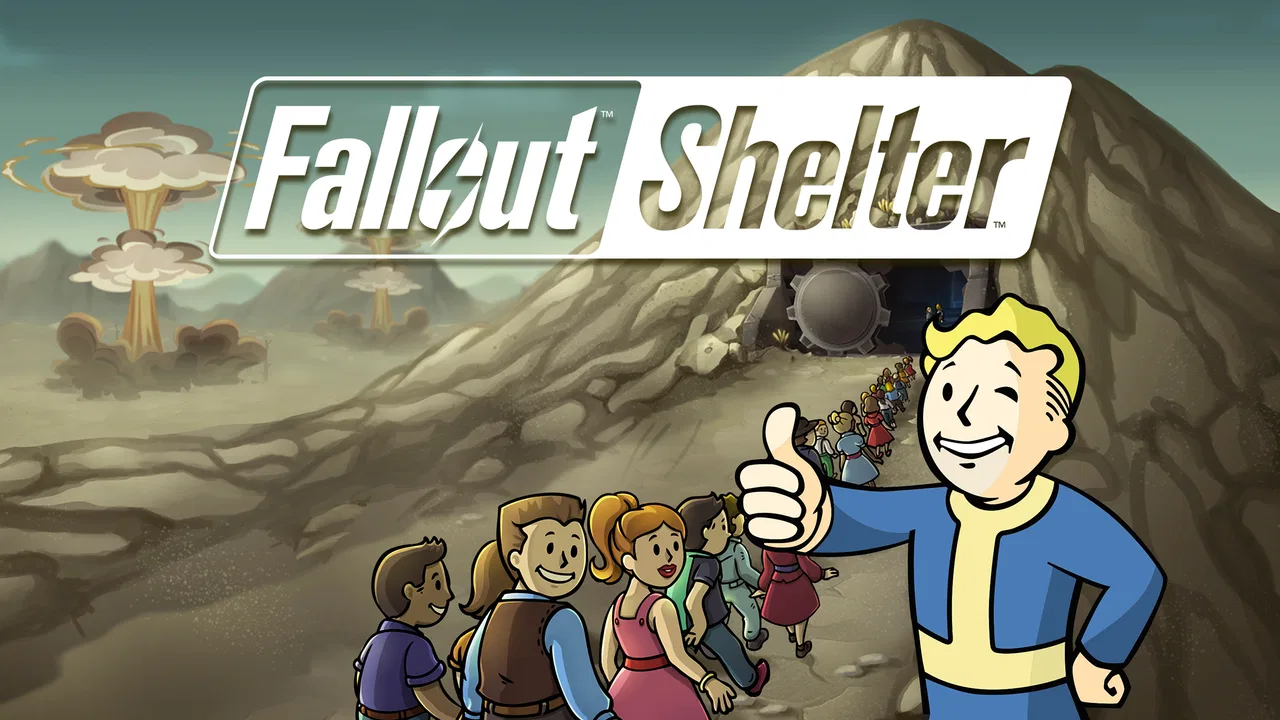
Fallout Shelter
- 4.6
- Rating
- 50.00M
- Installs
- Free
- Price

 Analysis by App-foxy
Fallout Shelter is the kind of simulation game that looks cheerful for a moment, then quietly reminds you that every comfortable room depends on difficult decisions. I built my underground community one room at a time, assigned residents to jobs, watched resources rise and fall, and learned that a well-organized Vault can still become chaotic after one bad stretch. That contrast is the game’s strongest identity: bright retro-futurist visuals wrapped around a survival-management routine.
Developed by Bethesda Softworks LLC, this free game places me in charge of an underground Vault rather than asking me to guide a single hero through a conventional adventure. It belongs to the simulation category, but it also has light role-playing and strategy elements. I am constantly balancing electricity, food, water, morale, room placement, resident skills, and outside threats. The result is approachable enough for short sessions, yet layered enough to reward planning.
The game has earned a 4.6 average from around 3.9 million ratings, with more than 50 million installs. Those figures make sense to me because the basic loop is easy to understand: build a room, give it a purpose, place suitable residents inside, collect resources, and expand when the Vault can support it. The deeper appeal comes from seeing those simple actions combine into a small living system.
You May Also Like

 Blood Strike: 2.5 Anniversary
Blood Strike’s Loadouts Turn Every Drop Into a Tactical Gamble
A close look at Blood Strike’s custom loadouts: how fast access to signature weapons reshapes its battle royale rhythm, rewards preparation, and narrows the gap between fights.

 Pandora - Music & Podcasts
Pandora’s Music Is Easy to Start, but Harder to Recover
Pandora’s strength is its low-effort path from a seed to a station. Its weak spot is how much confidence it asks you to place in connection, setup, and quiet recovery.

 8 Ball Pool
 Is Built on Rivalries, Rematches, and Routine
A close look at the rivalries, rematches, shared routines, and unanswered safety questions that turn a quick pool match into a persistent mobile community.

 Samsung Music
’s Quiet Strength Is Playing What You Already Own
Its reach comes less from spectacle than from dependable access to a personal library. That simplicity is both the app’s strongest retention engine and its ceiling.

 AccuWeather: Weather Radar
AccuWeather Review: A Quick, Clear Forecast for Everyday Decisions
For everyday plans, the best forecast is the one you can understand quickly. AccuWeather makes rain timing, radar, and local conditions easy to act on, with a few trade-offs.

 Hill Climb Racing
Why Hill Climb Racing Still Turns Crashes Into One More Run
A tiny car, a bumpy hill and one more upgrade: Hill Climb Racing keeps resurfacing because its simple chaos makes every near-miss feel personal.
More From Our News Desk



How the Vault turns a bright style into a playable mood
I find the Vault’s cheerful look does more than soften a grim setting: it helps me read a busy shelter quickly and makes routine checks feel inviting rather than bleak. That contrast also shapes how I respond to trouble, since the playful presentation never removes the consequences of a poor plan. The next section looks at how the art direction makes the game’s mood clear through its rooms, residents, and emergencies.
A friendly first impression with serious consequences underneath
The opening hours are welcoming. The cartoon-like character design, rounded machinery, clean room layouts, and expressive residents make the underground setting feel readable rather than oppressive. I never had to study a complicated interface before making my first useful decision. Rooms communicate their purpose visually, residents are easy to select, and the Vault gradually grows from a few connected spaces into something that feels like a community.
That friendliness is not just decoration. It makes failure easier to accept. When a room catches fire or hostile creatures enter the Vault, the presentation keeps the situation understandable instead of turning it into visual noise. I can see where the problem is, move residents to respond, and decide whether the emergency is worth handling immediately. The game’s art direction gives every crisis a playful surface, even when the underlying resource loss is genuinely inconvenient.
My first useful lesson was to resist expanding simply because an empty space was available. New rooms increase the Vault’s potential, but they also raise the demand for power and other supplies. A compact layout with dependable production is usually more comfortable than a wide Vault that looks impressive but struggles to keep its lights on. That is an important distinction between decorating a shelter and managing one.
The interface also supports a practical everyday rhythm. I can open the game during a short break, collect completed production, check which residents need attention, and leave again. A longer session gives me time to rearrange rooms, train residents, send someone outside, or respond to an incident. It does not require every session to become a major commitment, although the game becomes more demanding when several timers and problems overlap.
The art direction explains the world without long exposition
The setting is communicated through visual language more than lengthy storytelling. The Vault’s clean corridors suggest order and control, while the wasteland outside represents risk, uncertainty, and useful opportunity. Residents look like parts of the same strange society, yet their different outfits, abilities, and expressions help the population feel less like a spreadsheet.
I particularly like how the cheerful retro style softens the management interface without making it meaningless. Power generators, diners, water facilities, training rooms, storage areas, and living quarters all have distinct visual identities. Once the Vault becomes busy, I can often understand its condition at a glance: a production room full of workers feels stable, while an understaffed section looks like a warning that needs attention.
That clarity becomes valuable when the population grows. The game asks me to think about where rooms belong, not only what they produce. Grouping similar production rooms can make collection and defense easier to manage, while placing important facilities carelessly can create longer response times during trouble. The most attractive arrangement is not always the most efficient one, and the best layout depends on how actively I want to supervise the Vault.
One subtle strength is that the inhabitants give the shelter a sense of continuity. I remember residents who performed well, failed during an emergency, or became useful after training. This makes the population feel more personal than a simple collection of interchangeable workers. At the same time, the game never becomes a full character drama, so anyone expecting deep dialogue choices or a story-heavy role-playing experience may find the residents functional rather than emotionally complex.
Sound and pacing keep routine tasks from feeling empty
The audio design supports the setting without competing with the management work. The Vault has a mechanical, enclosed feeling, while the visual tone remains light. Sound effects help signal activity and trouble, which matters because I often divide my attention between several rooms. A sudden incident feels more urgent when the audio confirms that something has gone wrong instead of leaving the problem hidden in a quiet interface.
The pacing is built around anticipation rather than constant action. I assign residents, wait for production, check progress, and then make a small correction. That rhythm can be relaxing when the Vault is stable. It becomes more tense when resources are low or an emergency interrupts a carefully planned routine. I enjoy this because the game allows calm and pressure to exist in the same session.
There is also a useful difference between active and passive play. If I am checking in frequently, I can react to incidents quickly and keep production moving. If I leave the game alone for longer, I return to a situation that may require several repairs or assignments. This makes the title suitable for people who enjoy gradual progress, but less suitable for players who want a completely hands-off idle game where nothing meaningful can go wrong.
My practical advice is to treat the audio and visual alerts as part of the management system, not merely atmosphere. When I am rushing through collection, it is easy to overlook a resident in trouble or a room that needs attention. Slowing down for a few seconds after an alert usually prevents a small problem from becoming a chain of resource shortages.
Why the mechanics fit the underground setting
The central mechanics work because they express the fantasy of running a sealed community. Electricity supports the facility, food and water keep residents functioning, and room placement turns the Vault into a physical plan rather than a list of menus. Every expansion creates a new responsibility, so progress feels earned instead of purely decorative.
Resident assignment is more interesting than simply filling empty jobs. Different residents are better suited to different tasks, and moving the right person into a room can improve the way that section operates. I found it useful to think in terms of dependable teams rather than constantly chasing perfect assignments. A stable worker in the correct room is often more valuable than a theoretically better resident who is needed elsewhere.
Training adds a longer-term layer to that decision. Instead of waiting for an ideal population to appear, I can improve residents over time and shape them toward particular roles. This helps the Vault feel like a place that develops. The trade-off is that training rooms occupy space and residents assigned to them are not producing resources immediately, so preparation has a real short-term cost.
Exploration provides a different pace from indoor management. Sending a resident outside creates the possibility of useful discoveries and rewards, but it also removes that person from the Vault and exposes them to danger. I do not treat exploration as automatic profit. Before sending someone out, I consider whether the shelter can spare their work, whether the resident is prepared, and whether the likely reward justifies the risk. That choice is one of the clearest examples of the game turning atmosphere into mechanics.
Incidents are another important part of the fit. Fires and attacks force me to care about distance, staffing, and readiness. A room that seemed perfectly acceptable during quiet production can become a liability when residents must respond quickly. I learned to avoid building a layout that only works when nothing goes wrong. The strongest Vaults are not merely productive; they have enough flexibility to absorb interruptions.
Where the game asks for patience
The free entry point is generous enough to let me understand the main loop before deciding whether I want to invest more time. However, the pace can feel slower once the Vault becomes larger and improvements require more waiting or careful resource management. In-app purchases range from $0.99 to $99.99 per item, so players who dislike optional spending should keep a firm boundary around what they are willing to buy.
I prefer treating purchases as a choice rather than a solution to every management problem. Spending may reduce friction, but it does not replace good room planning or sensible assignments. If a Vault is poorly organized, accelerating progress can simply create a larger, more demanding version of the same problem. The game is more satisfying when I use purchases, if at all, to support a plan rather than to avoid learning the systems.
Another limitation is repetition. The basic pattern of collecting, assigning, waiting, and responding remains familiar. That consistency is comforting for a simulation fan, but players who need constant novelty may eventually feel that the Vault is asking for the same kind of attention. The outside activities and incidents vary the routine, yet the game is still fundamentally about maintaining a community over time.
The Teen content rating is worth considering for families. The presentation is stylized and humorous, but the setting includes danger, combat situations, and survival themes. I would not describe it as a harsh or graphic experience, though younger players may still need guidance around the management pressure and optional purchases.
How it compares with other simulation choices
Compared with a traditional city builder, this game is more personal and more constrained. I am not shaping a broad landscape with roads and districts; I am maintaining a narrow underground society where each room and resident matters. That makes decisions easier to understand, but it also means there is less freedom to create a huge, visually varied city.
Compared with a conventional role-playing game, the focus is reversed. I am not mainly controlling one hero through a scripted journey. I am supervising a group, improving their usefulness, and accepting that the Vault’s needs may matter more than any single resident. Players who want direct combat and a strong individual protagonist may prefer a different Fallout experience or another action-focused game.
Compared with a pure idle game, Fallout Shelter demands more attention. Production can continue while I am away, but incidents and shortages make checking in worthwhile. That middle ground is its main appeal: I can play casually, yet my choices still have consequences. It is a good fit for someone who wants a management game that respects short sessions without becoming entirely passive.
Who will enjoy it, and who should skip it
I recommend it to players who like arranging systems, watching a community improve, and making small decisions that accumulate into a larger result. It is especially suitable if you enjoy games that can be opened for a few minutes but still offer a reason to return later. The bright presentation also makes it easier to approach than many bleak survival simulations.
I would be more cautious if you dislike timers, resource balancing, or repeated maintenance. The game does not transform into a completely different experience after the first few hours; its pleasure comes from refining the same core responsibilities. Players looking for a fully offline-feeling single-player campaign, deep dialogue, or uninterrupted action may find the management rhythm too slow.
For a realistic daily scenario, imagine checking the Vault during a commute break. I might collect supplies, notice that a production room is understaffed, move a trained resident into place, and send another resident outside before closing the app. Later, an incident may require a quick response, so the earlier decision about room layout suddenly matters. That is the game at its best: small actions that remain connected to the shelter’s wider condition.
Small habits that make the Vault easier to manage
I get better results by stabilizing essential production before adding ambitious rooms. Expansion is tempting because new facilities make the Vault look more complete, but every addition changes the resource balance. I also keep an eye on residents who are repeatedly moved between jobs. Constant reshuffling may solve one shortage while creating another, so training and consistent placement are usually better long-term answers.
When preparing an explorer, I think beyond the immediate reward. The resident’s absence can weaken an important room, and their return may not line up with the next production cycle. I prefer sending someone who can be spared rather than removing the best worker from a critical facility. This is a small planning habit, but it prevents exploration from quietly damaging the shelter’s daily rhythm.
I also avoid judging a room only by its output. A facility can be productive and still be badly positioned for emergencies. Keeping response routes manageable and maintaining a reserve of capable residents gives the Vault more resilience. The game does not need a perfect layout, but it rewards players who design for trouble instead of assuming calm conditions will last.
A coherent atmosphere with a manageable learning curve
Fallout Shelter succeeds because its style and mechanics point in the same direction. The clean cartoon visuals make the Vault inviting, the enclosed setting gives every room a clear purpose, and the sound design supports a rhythm of quiet work interrupted by danger. Even the cheerful tone contributes to the setting: this is a society trying to preserve normal life in an abnormal world.
Its strongest moments come from the connection between appearance and consequence. A room is not just a colorful tile; it consumes resources, supports residents, and may become part of an emergency response. An explorer is not just a button press; that decision changes the staffing balance inside the Vault. Those links give the simulation more character than its simple controls initially suggest.
The game is not ideal for everyone. Its long-term routine can become repetitive, optional purchases may tempt impatient players, and its character depth is lighter than its setting might suggest. Still, I think those limitations are easy to understand before committing to it. If you want a polished, approachable underground management game with a distinctive mood, the free starting point is worth trying.
The current version is 2.1.2 and it runs on Android 7.0 or later. With a Teen age rating, a free download, and a design built around both brief check-ins and longer planning sessions, it remains an accessible choice in the simulation category. My recommendation is simple: play it as a careful shelter-management game, not as an action adventure. When I approach it that way, the art, sound, pacing, and mechanics form a remarkably consistent experience.
FAQs for Fallout Shelter
01What is the main objective of Fallout Shelter?
In Fallout Shelter, your primary goal is to build and manage a successful underground Vault. You must ensure the well-being of your Dwellers by providing them with necessities like food, water, and power. You also need to expand your Vault, keep it secure from threats, and send Dwellers on quests to explore the wasteland for resources.
02How do I manage resources efficiently in the game?
Efficient resource management involves balancing your production rooms to meet the needs of your Dwellers. Assign Dwellers with high SPECIAL stats to appropriate rooms to maximize output. Regularly upgrade your rooms, and maintain a good population level to ensure you have enough resources like power, water, and food to keep your Vault thriving.
03Can I play Fallout Shelter offline?
Yes, Fallout Shelter can be played offline. However, an internet connection is required for certain features, such as purchasing in-game items and syncing your game progress across multiple devices. Playing offline will limit these features, but you can still build and manage your Vault without an active internet connection.
04What are the in-app purchase options, and are they necessary?
Fallout Shelter offers in-app purchases like Lunchboxes, Mr. Handy robots, and Nuka-Cola Quantum, which can enhance your gameplay experience by providing extra resources or speeding up processes. While these purchases can be convenient, they are not necessary for enjoying the game. It's entirely possible to progress and succeed without spending real money.
05How do I protect my Vault from threats?
To protect your Vault from threats like raider attacks, fires, and radroach infestations, ensure you have armed Dwellers stationed in strategic locations. Regularly upgrade your Vault doors and equip Dwellers with weapons and outfits. Training room upgrades and keeping Dwellers healthy and happy will also strengthen your defenses.
Pros
- Engaging gameplay with strategic elements.
- Free-to-play with optional in-app purchases.
- Charming graphics and animations.
- Offline play available for convenience.
- Regular updates keep content fresh.
Cons
- Can become repetitive over time.
- Requires patience or spending for faster progress.
- Limited social interaction features.
- Occasional bugs and crashes reported.
- Resource management can be challenging.

Fallout Shelter
Gallery